When Keir Starmer spoke to the nation outside 10 Downing Street the morning after his historic election victory, he seemed keenly aware of the tempests that had crashed through his new address over the previous few years. Britain’s sober new captain talked of navigating to “calmer waters”, of “stability and moderation”. He would lead “a government unburdened by doctrine”, he told those listening, that would “tread more lightly on your lives”.
But right there at his premiership’s launch, Starmer was throwing his compass and charts overboard. By promising to take the doctrine out of government, he was left offering mere administration. His only North Star would be to stick to the rules. This, it turned out, was not what people wanted from a government elected on a promise of “change”.
And so, just over two years later, a new prime minister stood on the same spot, and said something very different. Andy Burnham charged that in the 1980s, “political power was centralised, economic power privatised”. This had had terrible consequences for places like Merseyside, near where he grew up, and Greater Manchester, which he went on to lead as mayor. He vowed that, “We will take power out of here and carry it into every postcode in the land.”
Earlier this year, in a report called Power Failure: A New Theory of Power for the Future Governance Forum thinktank, I argued that British politics desperately needed a clearer conception of power, and how, over the last few decades, it has come to be so badly -misallocated—concentrated when it should be devolved, and dispersed when it should be centralised. So our new premier’s focus on this theme was very welcome. But the need for a doctrine—or what we might call a theory of power—remains: who has too much power, who has too little, and how do we fix that?
Burnham seems particularly marked by how, in his view, the crises of the last 18 years have exposed where power lies
One or two of our many recent premiers have offered such a theory.
Theresa May had one about “burning injustices”, but it was unmoored from the priorities of her party. Liz Truss espoused a kind of zombie Thatcherism, but it was unmoored from reality. And in fairness, even Starmer’s government did talk about this subject, sometimes. Its Pride in Place programme was billed as “the largest transfer of power from Whitehall to communities in history”. But his administration never thought about what that actually meant through to its logical conclusion and then acted on it. As one of Starmer’s advisers reportedly told the Times late last year, “I don’t think he has a theory of power… I don’t think he has ever sat down and read any history, or has any idea of how power works.”
But now, we have a prime minister who does have such a theory, leading a party that appears to agree with it. And not before time. Because, judging by the polls, the public has developed its own rough-and-ready theory of power, too—and it is driving many of them into the arms of hard-right populists. As I argued in my report, that theory goes something like this:
Everything is expensive. Nothing works. The people who are supposedly in charge are either useless or just don’t care. They say what they think we want to hear, but really, they just help their mates, and themselves. They don’t play by the rules, so why should we?
Burnham has evidently been worrying for a while about how Labour can respond constructively to this disaffection, and start to persuade people that mainstream, non-populist politics can act radically enough to improve their lives. In May last year, he warned that the rising threat from Reform UK “means the left will now have to make changes that we should have made many years ago… something new is going to break through”.
That sounds like a willingness to try to do the sort of thing that has driven transformative change in British politics before. In the 1940s, Clement Attlee led Labour to break from the old interwar fears of inflation and borrowing that had entrenched the interests of the City, and so shifted power towards working people. And in the 1980s, Margaret Thatcher faced down the old fears of mass unemployment that had underpinned the power of the unions, and thus shifted power back the other way. So what’s Burnham’s version of that story?
In 2024, he published Head North—“a book about power and how unevenly it is distributed across Britain”—written with the mayor of the Liverpool City Region combined authority, Steve Rotheram. The theory of power Burnham sets out goes roughly like this:
Britain inherited its existing political system from the feudal past. It leaves MPs and much of the country disempowered. Power remains concentrated—hoarded—by around 50 mostly unelected people who effectively run the country in the interests of the south-east and the City of London. Senior civil servants effectively control much of government. Potential opposition is neutralised by the whipping system, which coerces MPs to support the executive regardless of their beliefs, effectively “transferring power from elected representatives to Whitehall mandarins”.
This shares the public’s suspicion that those in power do not put ordinary people’s interests first. But crucially, Burnham’s theory differs from the public’s in focusing blame on the Whitehall machine, much more than on MPs, and in offering a solution—pretty much the one Burnham has been deploying as prime minister. That is, a strengthening of political control to pull power back from an overdominant Treasury. And, crucially, devolution.
At Manchester’s People’s History Museum on 29th June, even before he took office, Burnham announced that he would create a new Number 10 North in Manchester, designed to effect both of these changes. It would have responsibility for regeneration and reindustrialisation; it would “make power flow” into the regions. On 23rd July, just three days after he had become prime minister, Number 10 North was ready for a delighted Burnham to open. A week later, a statement from his new cabinet titled “Rewiring the State” announced “a major transfer of powers, resources and functions from central government to elected mayors and local authorities in regions across England”. This will include control over some elements of taxation.
But does the theory of power he is now rapidly putting into practice have a clear sense of how some forces acquired too much power—of the fears and ideas that underpin our current skewed settlement? Only then can he hope to break despairing voters’ attraction to Nigel Farage. To find out, we first need to examine why Burnham thinks this way at all.
By the time he became prime minister, Andy Burnham had served 25 years in national politics—more than any premier since Jim Callaghan. By his own account, Burnham’s attitude to power has been forged by his experiences since he was a bright-eyed New Labour spad-turned-MP in 2001. His hostility to the way the whips pry young members away from their ideals is clearly personal. He has repeatedly invoked the advice he received early on from an older colleague (and fellow Catholic) Paul Goggins: that rather than using your position in parliament to leverage relationships with the already-powerful, “you should always use your power for those who have none”. Whether he has always done that is another matter, but the fact that Burnham is still quoting Goggins is telling.
Burnham seems particularly marked by how, in his view, the crises of the last 18 years have exposed where power lies. He recalls pushing to rescue investment in regenerating the site of a derelict colliery in his Leigh constituency, after the 2008 crash threatened to cancel the project. As health secretary in 2009, he was given a letter to sign which involved him—as he was later horrified to discover—in the cover-up of the infected blood scandal. The Brexit vote, he thought, was a “howl of anger”, a demand to take back control not only from Brussels, but Westminster. During Covid, as mayor of Greater Manchester, he found himself confronting the government of Boris Johnson as the outraged tribune of the north, pushing back at the way his region was subjected to sterner restrictions than London, with no commensurate financial support.
But the biggest turning point in Burnham’s attitude to power occurred because of a much earlier calamity: the 1989 FA Cup semi-final at the Hillsborough Stadium in Sheffield between Liverpool and Nottingham Forest. When police failed to prevent overcrowding of the terrace at one end of the ground, a catastrophic crush developed that injured 766 Liverpool fans, and led to the deaths of 97. The 19-year-old Burnham saw friends come home from the match devastated.
The city’s trauma was radically exacerbated by the victim-blaming that followed. This was led by South Yorkshire Police’s successful effort to falsely blame the fans in order to cover up its own gross negligence. In a still-infamous front page, the Sun falsely accused stricken Liverpool supporters of urinating on the police and picking the pockets of the -victims. This all came at the end of a decade in which an economically broken Liverpool had been cast again and again by the powers-that-be in London as something between a joke and an enemy.
Twenty years later, no one had been held to account. By early 2009, Burnham was culture secretary, and was invited to make a speech at an anniversary memorial to the dead at Liverpool FC’s Anfield stadium. This prompted “a personal crisis”, he wrote in Head North, over whether to try to commit the government to a fresh inquiry into the disaster, or to make “a platitudinous speech without any commitments”—whether to “continue to be a Westminster insider or be true to my roots”.
Whitehall’s own power has been dispersed: through outsourcing, the hiring of consultants, the privatisation of utilities and the creation of regulators to oversee them
Watch the footage today, and there he is: the minister up from London in his New Labour suit, 39 but looking younger, trying to read out his script in the face of 30,000 righteously angry Liverpool fans. When he says he’s there to represent the government, he gets booed. At one point the crowd launches a chant of “Justice for the Ninety-Six”. (The last person to die as a result of the tragedy passed away in 2021.) But at times, he wins applause. Particularly when he says the dead will never be forgotten.
Burnham has said that, had he not been the minister, he would have been shouting at the minister himself, and that he had to “reconcile that thing inside me”. His experience that day led to the establishment of the Hillsborough Independent Panel to oversee the disclosure of long-withheld evidence. In 2012, 23 years after the disaster, it exonerated the Liverpool fans and blamed a “lack of police control”.
So one way of thinking about Burnham’s theory of power is to picture him facing a furious crowd, trying to address their sense of injustice and disempowerment, and to find a way to make things right. But the emotional sincerity of the goal does not mean the theory will be effective. His account downplays a couple of key aspects of the imbalance of power he correctly diagnoses, because his history of how we got here has some important elements missing.

Burnham hails the consensus-breaking radicalism required to build the NHS, and rebukes the neoliberal turn of the 1980s. But between the two, something happened which complicates his account of a permanently excessive centralisation of power in Whitehall. After all, without that centralisation of power, Clement Attlee’s Labour government could not have created the NHS. One crucial difference between then and now is that in the 1940s, that centralisation came at the expense of the individual and of businesses, not local government, which was far more powerful than it is today. In the postwar decades, under governments of both parties, town halls built vast numbers of houses, while Whitehall instigated the construction of universities, motorways, nuclear power stations and even whole new towns.
As I explore in Power Failure, from the 1960s onward an ever less deferential public began to object to the state’s power—first over society, then later over the economy. Burnham’s critique of an overmighty Whitehall sounds a familiar echo from that period: the purr of Sir Humphrey Appleby in Yes Minister, effortlessly manipulating his sappy secretary of state into preserving the status quo. When it aired in the 1980s, Yes Minister captured the belief that the postwar state was too powerful—and that its leading officials served the interests of themselves and their kind, in a way similar to Burnham’s narrative today. But already, 40 years ago, that Yes Minister-style critique of Whitehall was licensing a curious dual shift.
Burnham is right that power was sucked out of local government to the centre. But from the 1980s onwards, Whitehall’s own power has also been dispersed: through outsourcing, the hiring of consultants, the privatisation of utilities and the creation of regulators to oversee them. In 1997, New Labour relinquished control of interest rates to the Bank of England. In response to scandals, a declining appetite among the public for risk, alongside a greater insistence on its rights, further levels of regulation have been introduced. The European Convention on Human Rights was incorporated into UK law and there has been a huge expansion in the reach of judicial review—the fear of which has now cowed those supposedly omnipotent Whitehall mandarins.
All this has led to a state in which power is certainly centralised as far as local government is concerned, but at the same time is entangled in risk-averse restrictions and continually reliant on multiple outside organisations—to the point where responsibility sits in so many places, it effectively sits nowhere. No wonder people get angry with government not just for being self-serving, but helpless.
Burnham does acknowledge the main elements of this. In Head North, he argued that hiving off “crucial public services has left us with an unaccountable state. There are now a whole range of quasi-public institutions—housing associations, academy schools, foundation trusts—who operate outside of true democratic control.” During the Makerfield byelection campaign, in an interview with the Times, he identified more elements of the “unaccountable state”: arm’s-length bodies such as the Environment Agency, “private agencies, water”.
And, since winning in Makerfield and returning to parliament, he has touched on the paradoxical way power has been both centralised and dispersed, talking of the “insufficiently accountable outsourced state”, and how, in the 1980s, “political power was centralised, economic power privatised”. His government will examine how to deal with some of the consequences of this. It will explore “whether individual arm’s-length body responsibilities and funding should be transferred to local leaders, or returned to ministerial departments”, and will test “where performative statutory duties to consult” on policymaking “can be revoked”. Number 10 North is now responsible for re-establishing public control of public utilities.
Yet somehow, the story of how all that became necessary remains subordinate to his basic theory—that an over-centralised Whitehall has too much power. Witness him branding organisations such as housing associations, private agencies and the water industry as being part of an unaccountable state.
This framing lets the private sector quietly slip from sight. Yes Minister’s co-author, Anthony Jay, was an enthusiastic free marketeer, and one consequence of all that critical focus since the 1980s on the unaccountable state has been to promote unaccountable private power in its place.
Burnham has certainly talked about reversing “40 years of neoliberalism”, but that seismic shift is not fully integrated into his theory. He argues that the few people in Whitehall in whose hands power is concentrated preside over “a political system that allows itself to be manipulated by powerful vested interests”. But those vested interests should themselves be put under the spotlight. The CEOs of big tech and of globe-spanning asset management companies such as BlackRock, Blackstone and Vanguard, with trillions of dollars of assets under management, are far more powerful than our most senior civil servants, even those atop the Treasury. Witness the way British government seems unable or unwilling to stop huge foreign companies buying up swathes of our homegrown businesses, even our critical infrastructure.
This settlement is the result of a transformation in political orthodoxy over several decades, which was driven by a compelling story about power. At its core is the idea that the overbearing, inefficient state should get out of business’s way, and that the job of a business is simply to maximise key metrics: profit, share price. Everything else—the impact on employees, customers, suppliers, the environment—is an “externality”. Even competition policy designed to protect the free market is often cast as a state-enforced barrier.
This “shareholder value” ideology stemmed from the relative powerlessness of individual small investors in the 1960s and 1970s. In 1963, the majority of the UK stock market was in the hands of individual domestic shareholders whose holdings were too insignificant to give them any leverage over powerful company bosses. In response, economists such as Milton Friedman argued that executives should make generating returns for their shareholders their overriding priority.
But in the decades since, share ownership has been revolutionised twice over: by the rise first of the fund manager and then those global asset management companies. By the early 1990s, British insurance firms and pension funds dominated share ownership; today, it’s international investors. In concert with privatisation, this has transferred power from both the British public sector and from British-owned companies to a globalised, but often American, private sector. The story of power that licensed this change is decades out of date, yet it still pervades British politics. If Burnham is to overturn 40 years of neoliberalism, as he has said, dismantling the narrative that underpins all this will be a large part of the task.
He acknowledges the consequences of this huge transfer of power—in Head North, he calls out the post-Thatcher financialisation of British housing, for example—but generally only on a case-by-case basis. As yet, he hasn’t integrated the overall shift into his story of the unaccountable state. He decries the Post Office scandal, but doesn’t focus on the company that made the defective software, Fujitsu. He lambasts the dumping of sewage in our rivers, the chaos on our railways, and the parlous state of privatised social care for the elderly, but there is little mention of the shareholders who benefit, in the short term at least, from cost-cutting and a lack of new investment. And he has launched policies to tackle consumer rip-offs such as fake bargains, hidden costs and hard-to-cancel subscriptions, but this is couched as a way to ease the cost of living, rather than being incorporated into a bigger story of abusive power. There is no private-sector villain in his narrative to stand beside the Machiavellian Whitehall mandarin.
There is an idea already present in Burnham’s story of power, however, that might bring these elements more sharply into play. It lies in the title of a 2017 report by the Right Reverend James Jones about how the Hillsborough victims and their families were failed by the state, and how this could be prevented in the future. To press his message home, Jones called his report The Patronising Disposition of Unaccountable Power.
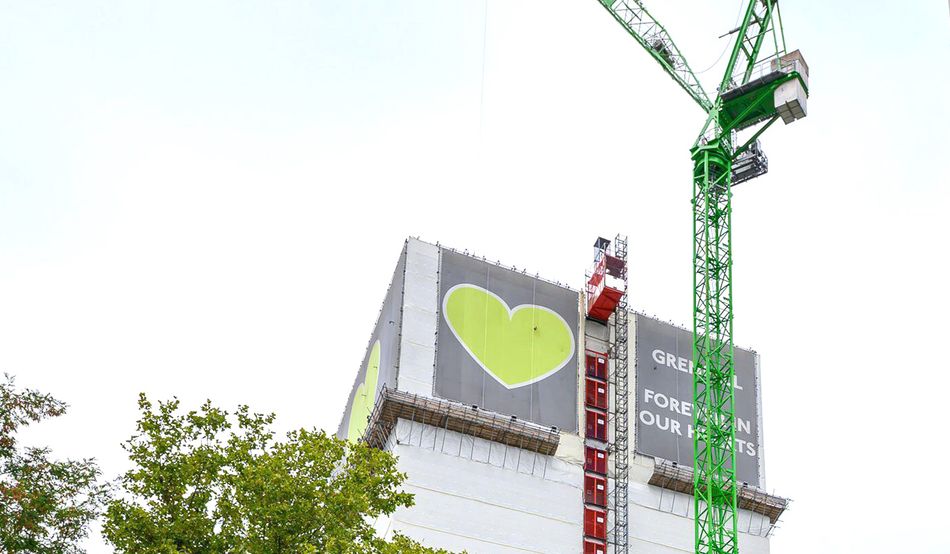
In Head North, Burnham described the report as “earth-shattering”, and underlined the wider implications of this phrase: the way that “victims of tragedies and scandals will often find to their cost that parliament doesn’t have the power they thought it had”. When MPs support them, their questions in the Commons “simply bounce off an intransigent executive”, reinforced by the whip system that keeps MPs in line. This, he wrote, leaves victims “face to face” with the phenomenon that the title of Jones’s report describes. More broadly, he has noted grim echoes of Hillsborough in the treatment of the victims of more recent scandals: the Post Office, infected blood, Windrush, Grenfell.
It is striking that Jones talks about “unaccountable power” rather than merely the “unaccountable state”. This means that his title might provide a single phrase that draws together all the abuses Burnham is concerned about, keeping private power firmly in the frame. People do not encounter that patronising disposition, after all, only in their dealings with the state. Most of us have come up against it from tech companies, or employers, or rip-off -merchants, or corner-cutting businesses. And just as the Post Office scandal involved Fujitsu as well as government, so the Grenfell Tower fire involved private companies yet to be held fully to account. As a new report by the thinktank Common Wealth shows, the company Arconic, whose flammable cladding encased the tower, has done more to compensate its shareholders than the survivors and the bereaved.
If Burnham wants to reverse the works of Thatcher, can he match her determination to identify and take on entrenched power?
That phrase “patronising disposition” also suggests a way to personify unaccountable power. For many fed-up members of the public and their populist goaders, politicians make for very visible villains (as, indeed, do migrants arriving in the UK on small boats). It is much harder to put a face on the unaccountable power that arises from a Whitehall department outsourcing a contract to a huge all-purpose company, for instance, or on the US private equity firm that owns a failing children’s care home, or the conglomerate that decides to close a cherished GP surgery.
But if Burnham is to succeed in making his theory of power override the one that currently dominates the public mind, it is vital that he turns that abstraction “unaccountable power” into a character. The emotional tug of Jones’s evocative phrase at least suggests a certain facial expression, a tone of voice, on the receiving end of which we have all found ourselves. “The patronising disposition of unaccountable power” starts to sketch a single villain, at work across public and private sectors. Even when they are not remotely as serious as the appalling treatment of scandal victims, the minor manifestations of this problem wear people down, too, as Burnham has highlighted. In a Guardian op-ed, he wrote about fighting “rip-off” business practices, declaring: “big or small, if it’s a problem for you, it’s a problem for us”. So why not cast himself as the aggrieved tribune of the British people, as he did for the people of the north during Covid, challenging on their behalf the sneer of unaccountable power wherever it appears?
Finally, Jones’s title points to what the various manifestations of unaccountable power have in common at a more ideological level. Why “patronising” as well as “unaccountable”? Because when an orthodoxy is entrenched as common sense among the powerful, overturning it seems politically impossible, naive, “unserious”. It requires identifying and superseding the apparently immovable ideas, and in particular the fears, that undergird entrenched power, with new, more pressing fears. That is how Attlee and Thatcher each forged a lasting new consensus.
This, though, raises the most basic question about the power struggle Burnham is proposing to lead. Does he have it in him to do what Starmer could or would not do, and follow the logic of his public statements through to fruition, overcoming all resistance? If he wants to reverse the works of Thatcher, can he match her determination to identify and take on entrenched power, by attacking the ideas on which its fortresses were built?
The danger with his current “let’s all pull together” rhetoric is that it yearns prematurely for consensus. Our history suggests that a durable new political settlement tends to arise when those trying to break a concentration of power succeed, and their defeated opponents eventually accept the ideas that have driven the change. The Conservative party achieved such an acceptance with alacrity in the late 1940s, and Labour with rather more agony in the 1980s.
Underneath his sunny rhetoric, however, Burnham has shown distinct signs that he grasps the nature of the fight that is required. Outside Downing Street he called for “a new national sense of unity, of common purpose and positivity”. When launching Number 10 North he exhorted those in government at all levels to “imagine if we were all working together as one team”—but he had just fired most of Starmer’s cabinet.
Likewise, in Head North, he acknowledged that, “Power has only been wrested out of the hands of the powerful when they’ve had no choice.” At the People’s History Museum, he talked about having had “ten years of fighting the Whitehall machine”, and announced that “the whole of Whitehall will now be required to get behind our places and work together with them to make quicker, more joined-up decisions”. And reflecting on the impact on ex-industrial areas of the UK of “40 years” of “neoliberalism, trickle-down economics”, he told the podcast How to Fail that “sometimes in politics, you have to say, ‘I’m going to break out of the consensus’.” His answer to the challenge that it is unthinkable to break from the current social care model is that “the status quo is the worst of
all worlds”.
This is the language of political transformation—an insistence that the status quo is intolerable, and that establishment warnings that change will cause something intolerable simply no longer wash. And that is very probably what many voters think when people say that they shouldn’t vote for Reform. Burnham has less than three years to win the struggle for power, and ensure that the transformation brewing amid the angry crowds he faces is the one he wants to see—not the one Nigel Farage
is offering.